Best Paper Award for Research from the Privacy Engineering Transfer Center
10.11.2026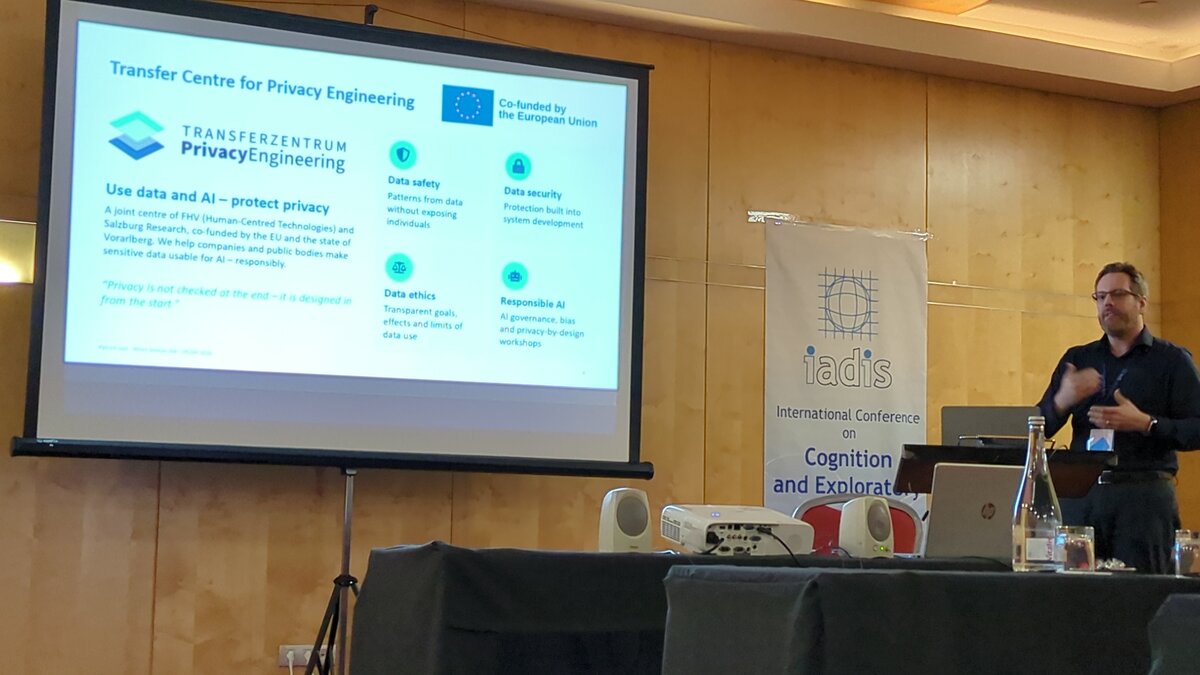
How AI can support the development of educational games
This award-winning study, by Patrick Jost (FHV) and Jonas Mair (PH Vorarlberg) examines how generative artificial intelligence can support teams in developing educational games that raise awareness of data protection. focuses on the question of how AI can be meaningfully integrated into creative development processes. To this end, the researchers examined the collaborative development of so-called “serious games.” These educational games are designed to help people better understand data protection decisions and make more informed choices in their daily lives. Unlike in a scenario where AI is permanently integrated, the development teams were able to decide for themselves when to utilize AI support. The results show that the AI was particularly helpful in highlighting weaknesses and potential conflicts in the game concepts. At the same time, it introduced additional critical perspectives into the development process, while decision-making authority always remained with the people involved.
“The award confirms our approach of viewing AI not as a substitute for human decisions, but as a tool that supports teams in bringing new perspectives to the table and developing better solutions,” says Patrick Jost, a researcher at the HCT research centre at FHV. International
Recognition for research on AI and data protection
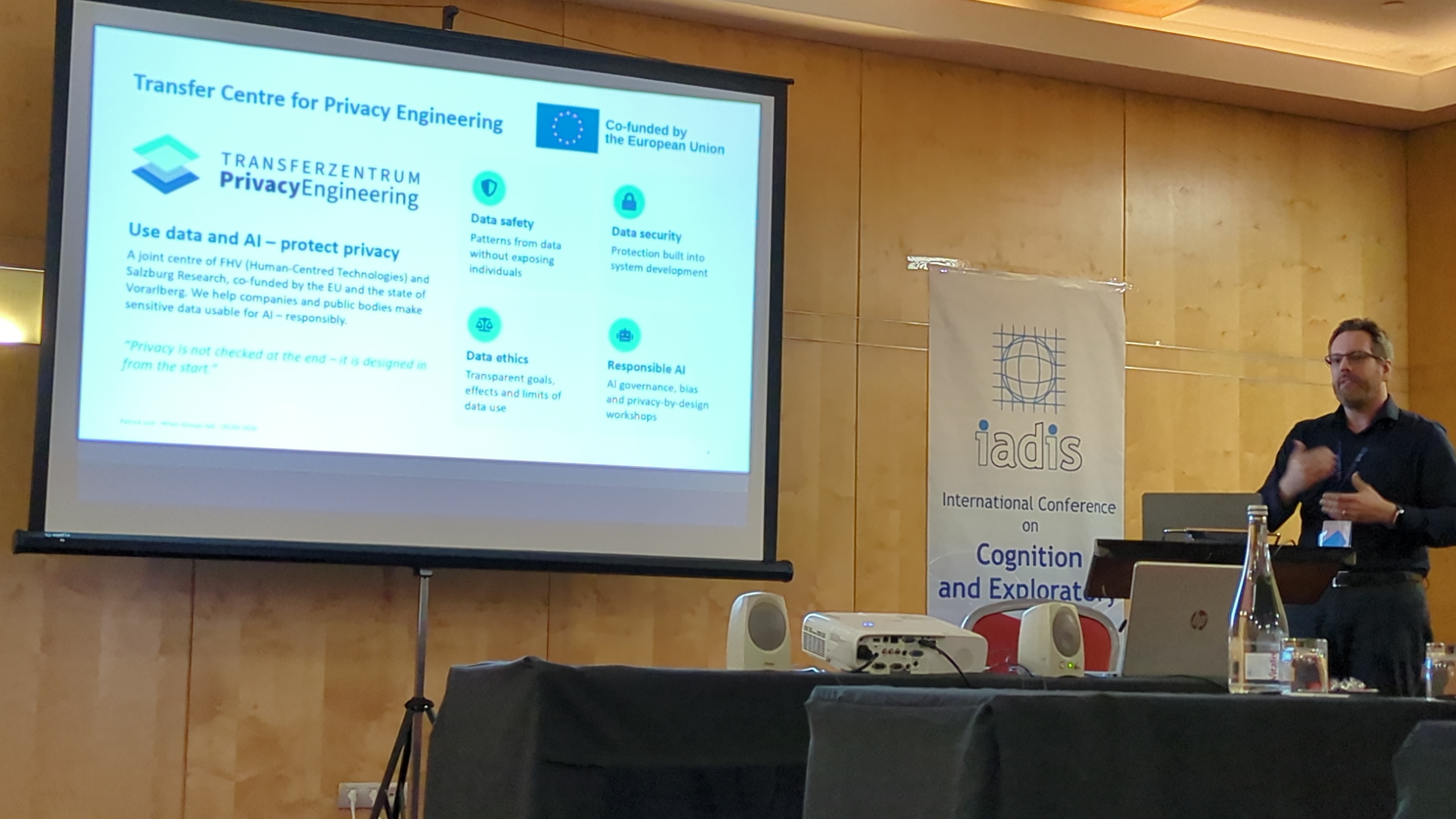
The award recognises the successful collaboration between the FHV and the Vorarlberg University of Education at the intersection of privacy engineering, educational research, and human-centered AI. For the Privacy Engineering Transfer Center, the Best Paper Award underscores the international relevance of its research on data protection literacy and the responsible use of artificial intelligence.


