Flying Classroom for schools
Exciting experiments
Flying Classroom is a school initiative that particularly addresses and promotes STEM instruction (Mathematics, Computer Science, Natural Sciences, Engineering and Technology) in Vorarlberg schools. Teachers in grades 7 and 8 can borrow experiments created by the FHV or partners and integrate them into their school lessons as a workshop or semester project.
Sounds exciting?

How does Flying Classroom work?
A school or teacher, ideally teaching STEM subjects or with an affinity for technology, selects the project that best suits their needs from a pool of experiments. You then get in touch with us to coordinate the dates and schedule.
There are two options for carrying out the experiments:
You can collect the experiments, including the training materials, from the FHV and run the workshops independently.
- There are 13 kits available for each experiment. We recommend working in pairs, so that up to 26 pupils can take part at the same time.
- The loan period is a maximum of 3 weeks.
If you would like support with preparation, we would be happy to carry out the experiments with you at the FHV. We will arrange an appointment for this, which you can also attend with a school class if you wish.
How the loan works:
Please send an email to flying_classroom@fhv.at with:
- Your contact details
- Your preferred dates
- Desired collection date
- Desired return date
- Your preferred experiment for the workshop
We will prepare the requested kits for you. These are checked in advance for completeness and functionality. We also provide spare materials in case anything goes wrong during the workshops.
The kits are to be collected from Franz Geiger on the agreed collection date. They are also to be returned to Franz Geiger on the agreed return date. Please return any damaged or non-functional components separately.
This service is free of charge provided the return date is met. A fee of EUR 50 per day will be charged for late returns.
As you will need a fully functional IT environment that enables students to work with Arduino IDE,
- internet access and
- write or installation rights on every computer
are required. It may therefore be beneficial for you if we conduct the Flying Classroom experiments together with your students at the FHV. Please allow 4 hours (net) for this. This session can also serve as your preparation session if you wish to run the workshops yourself at a later date.
What experiments are available?
|
|
Maker GuideContents: This manual offers exciting electronics experiments to carry out yourself. |
|
|
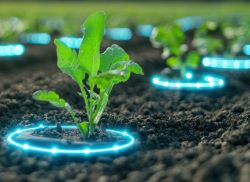
SchlaubeetContent: In this workshop, students build a garden bed irrigation system using materials found in the experiment set. The garden bed is also available as a semester project where the result is a real raised bed. |
|
|
BatContent: Students build the tracking system of a bat with electronics and some software. |
|
|
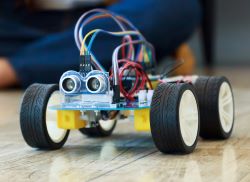
ElromoContent: Students build, program and test the Elromo robot. Popular obstacle followers and avoiders are also programmed. |
|
|
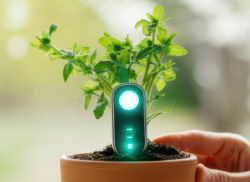
FloraContent: Flora is a flower pot monitor that continuously measures the moisture in the flower pot and triggers an alarm when the plants need to be watered. |
|
|
LED's GoContent: Students learn how to control internal and external LED's of the Arduiono Nano board through programming. |
|
|
Sensors, sensors, sensorsContent: Students discover the world of sensor technology and learn how electronic devices can perceive their environment (e.g. air pressure, temperature, light). |



The pool of projects is constantly being added to.
We are happy to advise you if you are not sure which workshop to choose
FAQs
We offer the hardware and detailed documentation for each workshop.
In preparation, we offer introductory and refresher courses for each workshop.
The FHV and its partners provide the workshops free of charge. Only a small contribution towards the cost of materials may be due, depending on the workshop.
Contribute ideas and become a partner of Flying Classroom
Schools, companies and institutions are welcome to get involved and share ideas for STEM experiments and workshops with us. Ideally, we can make these topics available to schools as part of Flying Classroom. There is still plenty of room for exciting topics.
