From studies to the family business
05.02.2026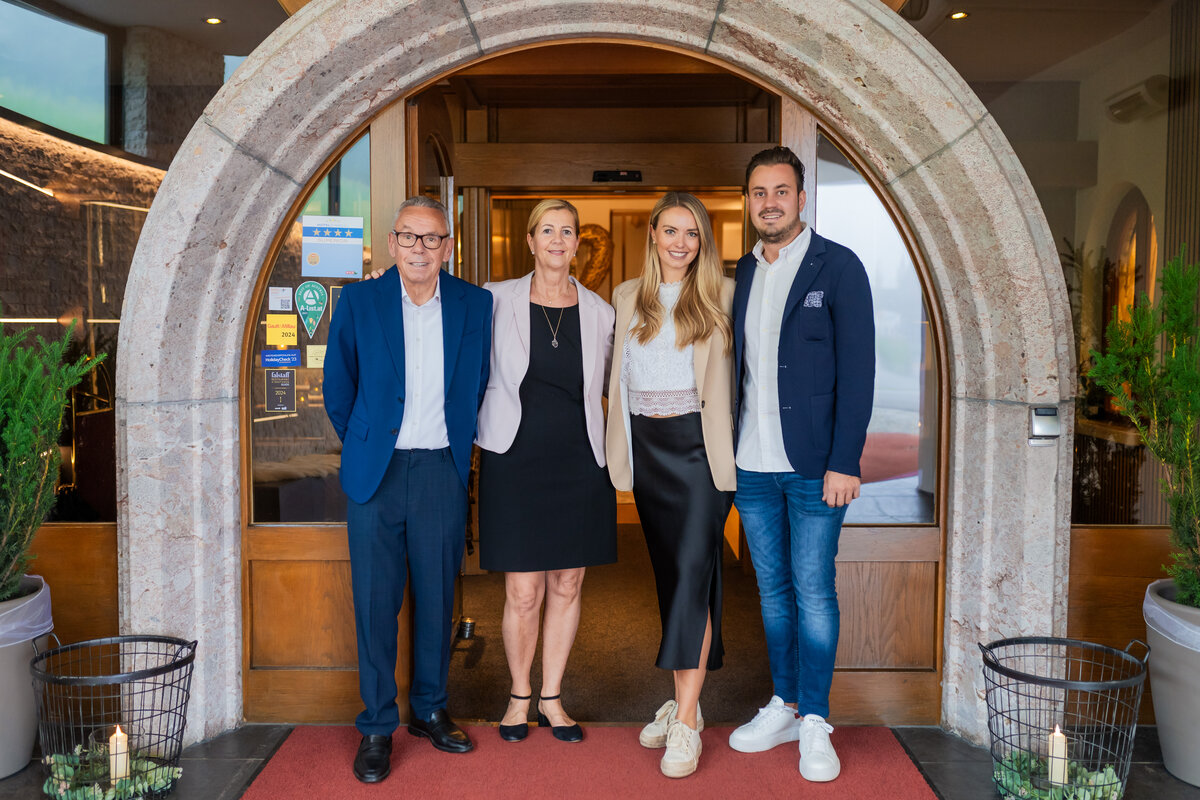
In her master's thesis, which was part of the "Why not?" research project, Magdalena Klauser took a close look at the question of why fewer and fewer successors are taking over tourism businesses. In this interview, she talks about the added value of her studies, her tasks in everyday hotel life and what it takes for a successful business succession in the hotel industry.
You completed your bachelor's degree in International Business Administration at the FHV and then went on to complete a master's degree in International Marketing & Sales. How does your degree help you in your day-to-day work?
Magdalena Klauser: The Master's in particular significantly expanded my toolbox in the field of marketing and gave me additional tools that I now use in my day-to-day work. The international aspect was particularly exciting. I learned a lot of new things during my studies at the FHV. You run the Damülser Hof together with your husband. How did your takeover go? Magdalena: My husband took over his parents' business and now we run the hotel together. Our handover worked very well because we started planning early on and always communicated openly with each other. That is still the case today. Just as we supported his parents before they took over the business, they now continue to support us.
Which areas of the hotel are you responsible for?
Magdalena: The tasks are varied and everyday life offers new challenges every day. I'm responsible for the processes at reception and in service, as well as for administration in the office. There are also always new projects that are planned and implemented. In general, we are actively involved in the day-to-day business as a family. That gives me great pleasure. Being close to employees and guests is particularly important to me. This allows me to respond quickly to concerns and motivate everyone to give their best.
How did the cooperation with the "Why not?" research project at the University of Innsbruck come about?
Magdalena: Back in the third semester of my bachelor's degree, I worked on a project with Alexander Plaikner, Senior Lecturer at the University of Innsbruck's Institute for Strategic Management, Marketing and Tourism and lecturer at the FHV. I then wrote my bachelor's thesis with him and it was already clear to me during this time that I would also write my master's thesis with him. I was also able to combine this with a research project. "Why not?" deals with the handover of accommodation providers. My tasks included developing the theoretical framework and, as a team, we conducted the interviews with the interviewees. After the transcription, I carried out the analysis and this was used as the basis for the project.
What are the key findings of the research work?
Magdalena: It became clear that many younger people who are potential takeover candidates face considerable challenges. These relate to factors outside the family - such as financial hurdles or organizational difficulties - as well as inter-family conflicts in particular. These include the often difficult letting go of parents and a lack of work-life balance, which is becoming increasingly noticeable in this industry.
What are your recommendations for successors and transferors of tourism businesses?
Magdalena: It is essential to start planning early on. A business handover usually affects the entire family and should therefore be prepared as early as possible to avoid unforeseen delays. Open communication within the family is also essential. Parents and children should communicate regularly and, if necessary, seek external advice.
Thank you for the interview.
The research project "Why Not? Takeover scenarios from the perspective of successors" shows why young people hesitate despite tradition, solidarity and emotional closeness to the industry - and which conditions create new prospects for successful handovers. The results provide the first in-depth insight into structural, emotional and Business and Management hurdles as well as innovative ways to secure the future of tourism businesses. Further information on the "Why not?" research project can be found here.