Mechatronics knows no boundaries
17.02.2026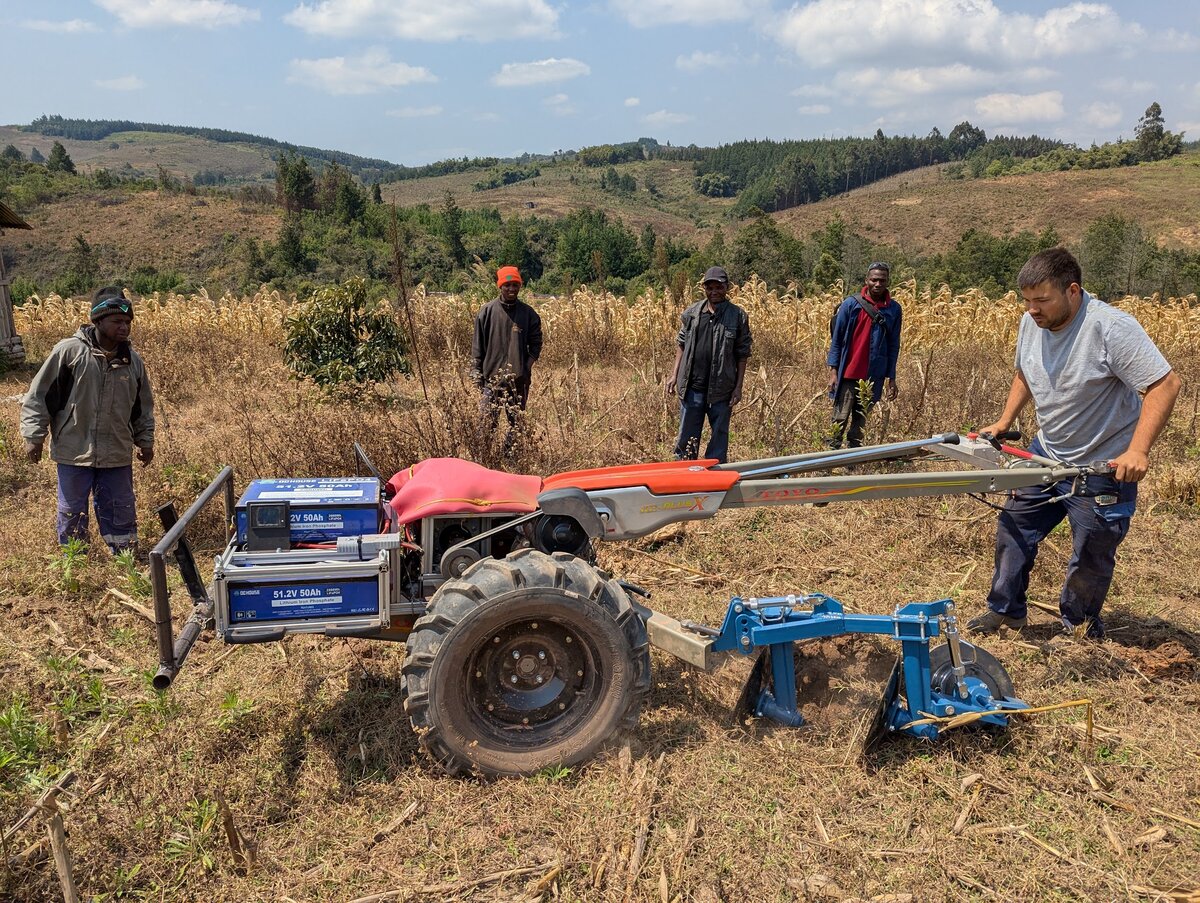
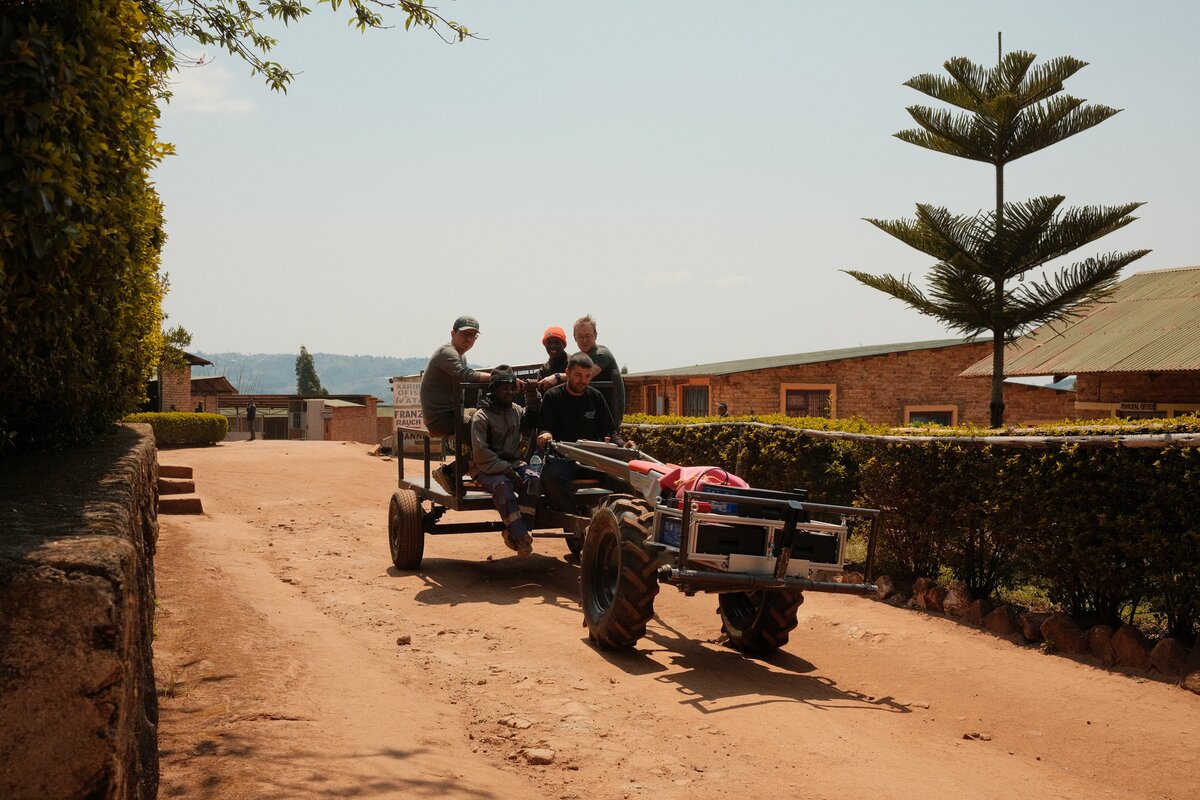
Daniel Bickel, Markus Erhard and Philipp Rigo successfully applied their interdisciplinary understanding from their Mechatronics studies in this project. Through a contact from the Vorarlberg NGO "Eine Welt Gruppe Schlins und Röns" (EWG), the team received a request to convert a tractor with an internal combustion engine to an electric drive. A vehicle that did not yet exist. "We thought it was such an exciting idea that we approached our program director Reinhard Schneider and turned it into our project for the fourth semester." In Tanzania, the organization RDO acted as a partner. In addition, various companies from the region supported the Vorarlberg NGO with donations in cash or in kind.
Mechatronics in its purest form
The basis for the project was an existing photovoltaic system, which was installed by a previous project of the NGO and generates sufficient local solar power. The team proceeded in stages: First, an initial prototype was developed as part of the FHV project, before a second tugboat was finally set up directly on site in Tanzania. Mechanical design, electrics, battery, control system and project management all intertwined in the implementation of their project. "This project is Mechatronics in its purest form. Without the interdisciplinary understanding gained during our studies, we would not have been able to solve the complex interfaces," the trio emphasizes in unison. The teaching and working tool is now being used for agricultural training in Tanzania.
Working with many unknowns
The biggest challenge was the distance: "We developed a system for a vehicle that is 7000 km away, without any precise technical data. Tanzania was a 'black box', so to speak. Then there were the logistics, working with limited tools on site and language barriers. Improvisation was therefore required. But our efforts paid off. What thrilled us the most was the moment when the tugboat was started for the first time in Tanzania and worked. That was priceless," emphasizes Philipp Rigo. The trip to Tanzania was also an adventure. The implementation of this project showed real added value in the combination of theory and practice. Daniel Bickel, design engineer at Walser Fahrzeugbau, was responsible for the mechanical design, Markus Erhard, control and regulation technician at Dorfinstallateur, was responsible for the electrics and battery, and Philipp Rigo, Mechatronics technician at EHR Fahrzeugtechnik, was responsible for project management and the technical interfaces. They also received administrative support during the production of the first prototype from students in the second semester of the bachelor's degree program in Mechatronics at the FHV.
Partners wanted
In the bachelor's theses in the sixth and final semester, the tractor is being further developed by the students. Daniel is revising the design of the tractor, Markus is designing a battery charging management system and Philipp is developing a concept for a "micro-factory" so that the tractor can be produced directly on site in small series in the future. "If the concept proves successful, we are aiming to set up a company to implement the project in the long term. We are currently looking for supporters and partners for the pilot phase," says Philipp, inviting interested parties to get in touch.
Contact:
More information about the "One World Group" and the project can be found here: https://www.eineweltgruppe.at/post/elektrifizierung-landwirtschaftlicher-maschinen