Knowledge transfer workshop on load management for e-bus fleets
03.02.2026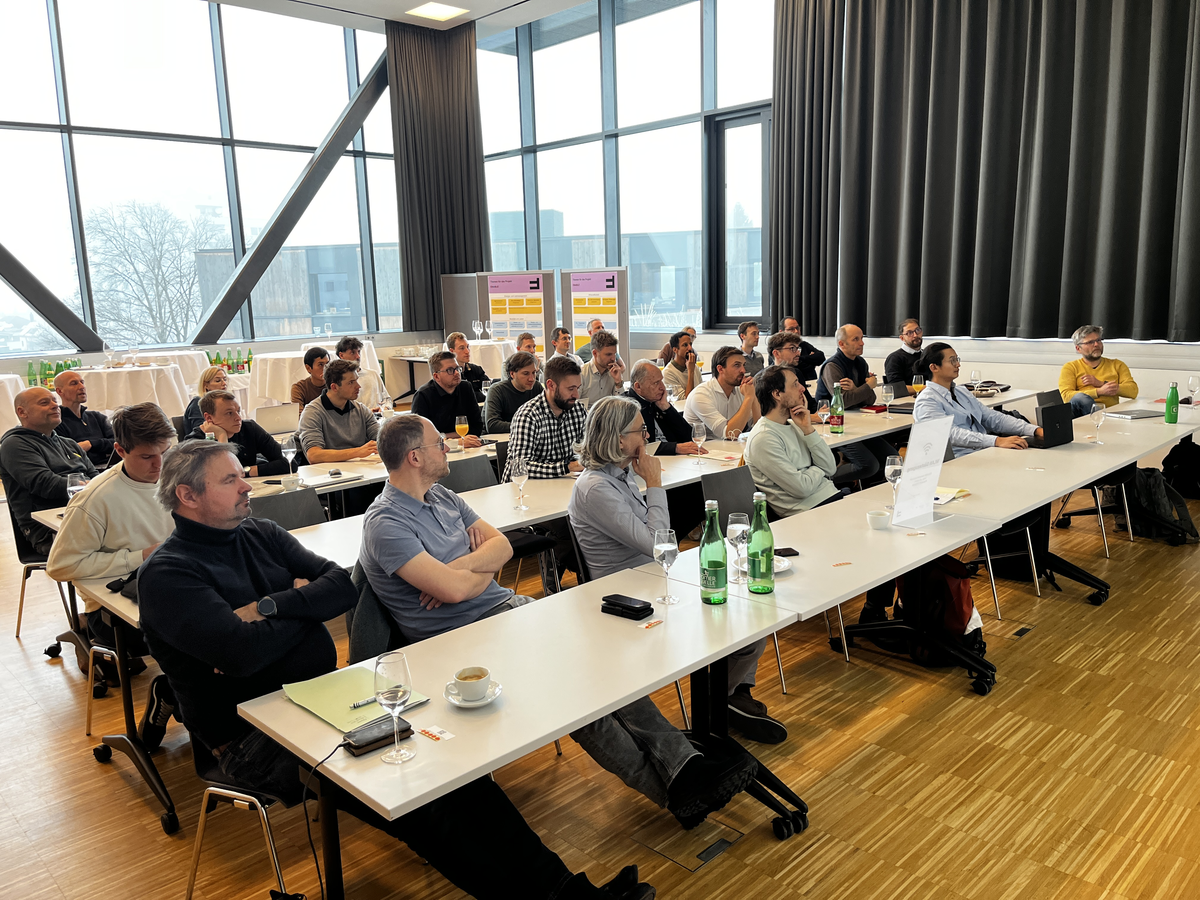
Operating an e-bus fleet poses many challenges compared to diesel buses: Which buses have range problems on which routes? How does energy consumption change in winter and summer compared to spring and fall due to the heating and cooling of the interior? Is the installed charging infrastructure sufficient? How can peak loads at the charging locations be avoided? How much could operating costs be saved through optimized charging management?
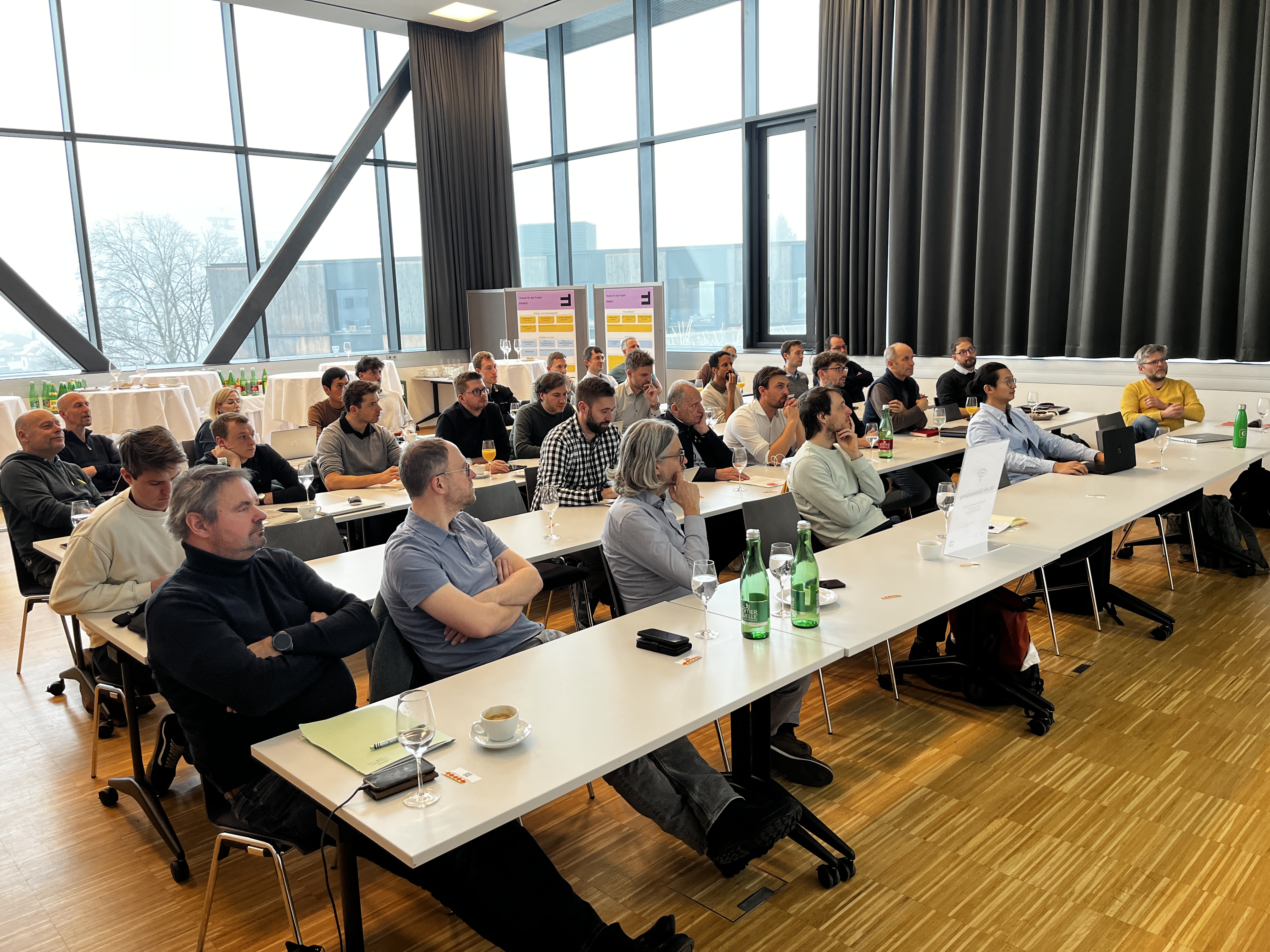
The Interreg ABH-funded FreeE-Bus project, in which two universities and three companies are involved, is dedicated to these challenges. At the knowledge transfer workshop on January 21, 2026 at the FHV, the results to date were presented and intensively discussed with 34 participants.
Contributions from the project:
- Ravensburg-Weingarten University of Applied Sciences (RWU) showed how realistic routes and energy consumption can be derived from GPS data.
- The FHV presented its own simulation and optimization models based on this data, which can be used to analyse charging load curves and optimize them according to various target variables - such as costs, network load or range.
- RWU, FHV and E-VO eMobility then presented how optimized charging plans can be implemented in a prototype test.
- vorarlberg netz, Verkehrsverbund Vorarlberg (VVV), illwerke vkw and vkw vlotte complemented the scientific input with a practical experience report from the planning, implementation and operation of charging infrastructure and e-bus fleets.
Relevance for the region and society
The project is not only of great importance for Vorarlberg and the Lake Constance region. The target groups include:
- Software manufacturers for charging load management, vehicle scheduling, dispatching, etc., who can integrate the open source software developed in the project.
- Bus companies that want to analyze and optimize their fleets, charging infrastructure and rotations according to various aspects.
- Charging infrastructure operators who can use the tools developed to improve planning and operation.
- Energy suppliers who design Energy and service prices based on the simulations and optimizations.
- Transport associations and local authorities that need support with strategic e-bus planning.
- Data-based analyses form the basis of e-bus fleet development for the VVV, for example.
- Technical offices and energy agencies that receive well-founded decision-making aids for design and consulting.
- Universities, which build up new expertise in the field of charging load management and e-mobility through cooperation with other target groups - in the follow-up project ENABLE also for e-truck fleets.
Find out more
The workshop presentations can be downloaded from the project website https://calc.labs.fhv.at/~freeebus/. The project website and the publicly accessible Github pages linked there will be expanded and completed by the end of the project on June 30, 2026.
Funding programme
This project is funded by the Interreg VI program Interreg Alpenrhein-Bodensee-Hochrhein, which is co-financed by the European Regional Development Fund. Further information can be found at: https://www.interreg.org/

For more information on our research activities in the field of e-bus and e-truck fleets:
 |
 |
|
|
Dr. Klaus Rheinberger |
Prof. (FH) Dr. Peter Kepplinger Head of illwerke vkw Endowed Proffessorship for Energy Efficiency, Head of Research Center Energy +43 5572 792 3801 peter.kepplinger@fhv.at |