Numbers that tell stories
11.02.2026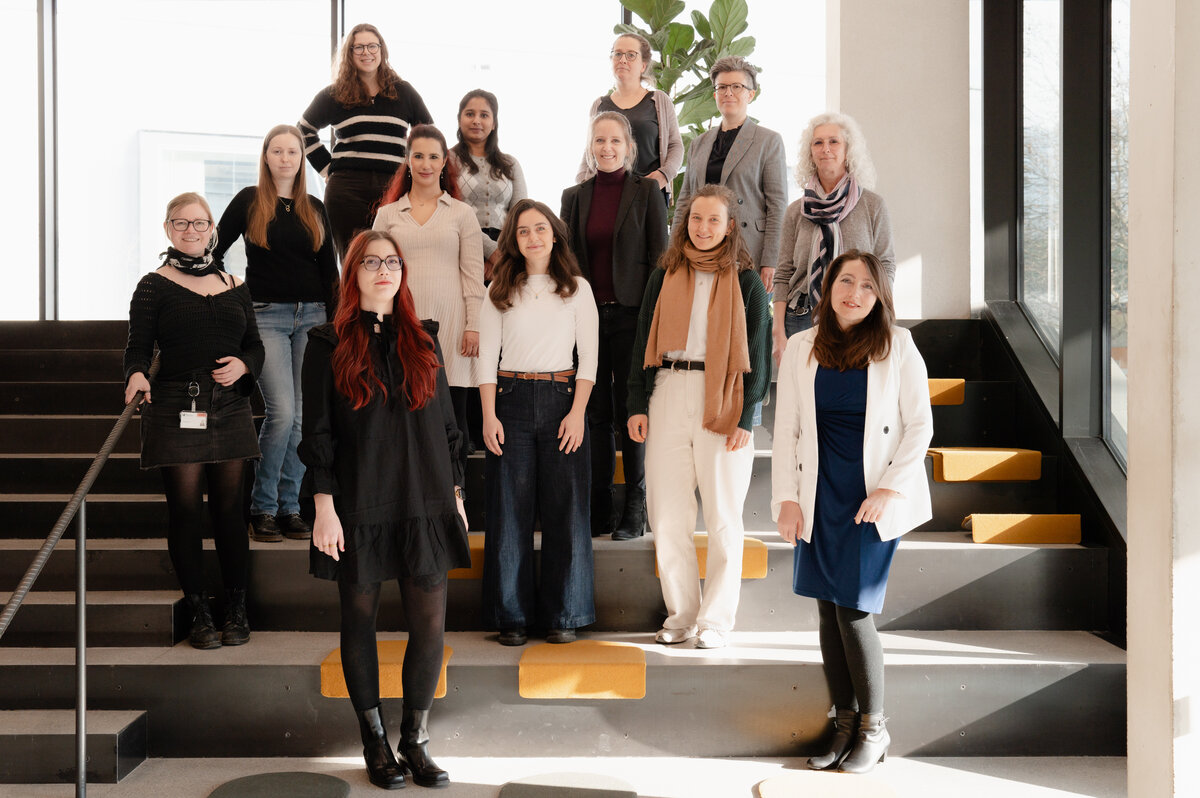
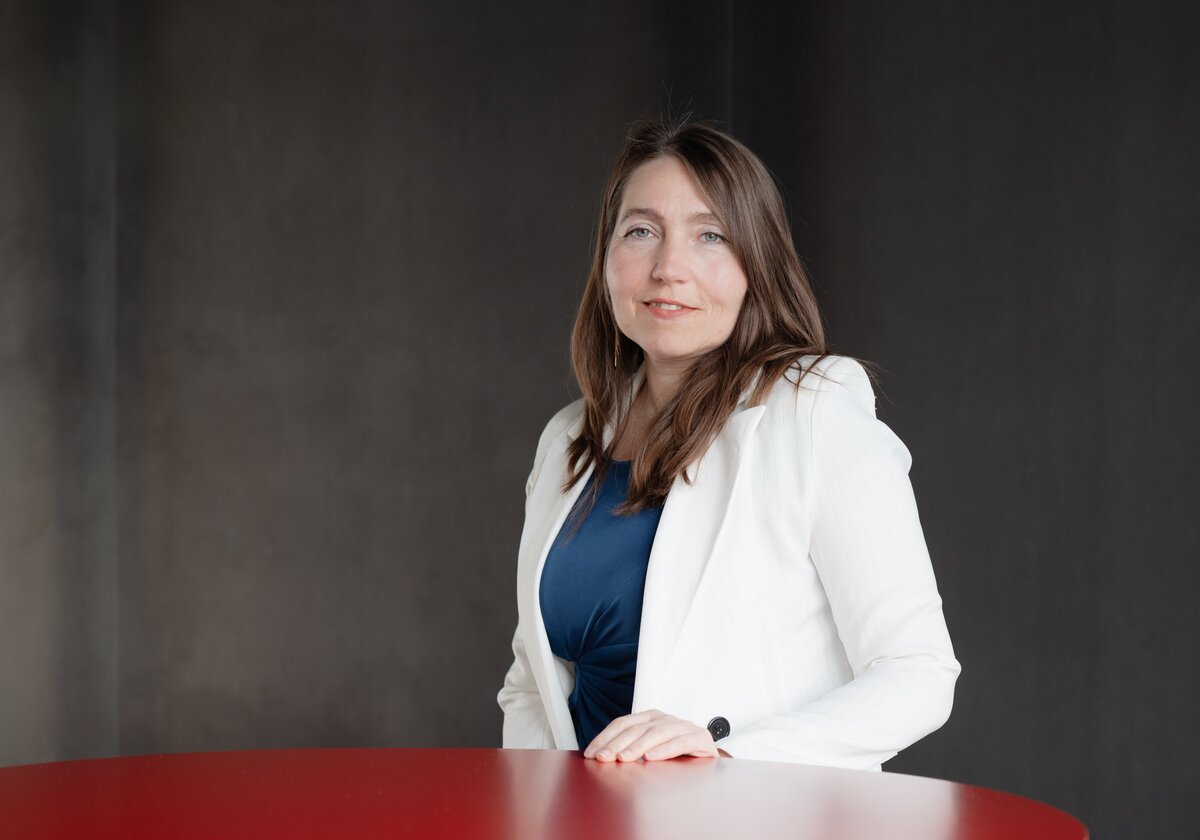
February 11 is the International Day of Women and Girls in Science. Currently, 35 percent of researchers at the FHV are women (in per capita figures). They make a significant contribution to scientific development and play a key role in shaping the work in the research centers and groups. As a representative of the female researchers at the FHV, the story of Natalia Burkina from the Business Informatics research center provides an insight into her work. As a data scientist, she uses logic, numbers and machine learning to make complex problems understandable under uncertain conditions, thereby enabling robust decisions.
Science that works
From Ukraine to Vorarlberg: data scientist Natalia Burkina researches methods that help companies make better decisions under uncertainty. Mathematics, Business and Management and Machine Learning form the basis for this. She liked storybooks less as a child, but logical tasks and brain games all the more. "Numbers tell stories, from chaos to structure. The key is to read them correctly," says Natalia, explaining her passion for her profession. She studied at the physical-mathematical high school, taught and researched in the field of business analytics and came to Vorarlberg via the crisis support program "Ukrainian Scientists in CDG Research Units" of the Christian Doppler Research Association. Influenced by an "exceptional" mathematics teacher who acted more as a mentor than a lecturer and a family in which science was part of everyday life, his passion became his profession: mathematics, business analytics and machine learning. At the Josef Ressel Centre for Robust Decisions at the FHV's Business Informatics research centre, she works in Michael Hellwig's team to develop analytics, machine learning and optimization approaches for ESG-relevant scenarios - from resilient business models to risk analyses. One formative experience was the integration of CO₂ pricing into stress tests in the Austrian banking sector. To summarize, she says: "Mathematics creates clarity, Business and Management asks the right questions, and programming translates models into working applications. In the end, it's not about predicting the future exactly, but about making decisions more robust."
Robust decisions in everyday life
For her, a private situation shows particularly clearly how closely data science and everyday life are linked: when her daughter developed a respiratory allergy, a burden became a data-based question. Which measures really work? How can air purifiers, air conditioning units and ventilation rhythms be controlled to reduce exposure and keep energy consumption low? "Situations like this show how important robust decisions are," says Natalia. "It's not about perfect predictions, but about being able to act responsibly despite uncertainty."
Teaching that opens doors
Alongside her research, Natalia teaches Operations Research on the International Business Administration bachelor's degree. The course is deliberately designed with a practical focus. "We call the course 'Unlocking Business Potential: The Strategic Power of Operations Research'. Students work on case studies and experience how dry numbers become strategies. Data science is creative, which surprises many."
Curiosity as a common thread
Science is also part of the family culture for her. Her daughter programmed robots and built electronic models at an early age. "Above all, children need curiosity, not prior knowledge. Anyone who asks questions and tries things out is already in the middle of science," says Natalia. She encourages girls in science "not to be afraid of complexity".
Vorarlberg as a research location
Professionally and scientifically, she appreciates Vorarlberg for its practice-oriented, innovative work culture and the short distances to Business and Management: "Solutions are created here that are scientifically sound and practically relevant. For me, Vorarlberg is a place where you not only work and do research, but where you can also develop personally and really feel at home." For her, the location combines nature, reliability and innovative spirit. And it allows what is important to her: science that is relevant - in the company, in everyday life and for the next generation.