Same drive, different stage: from skydiver to future manager
03.07.2026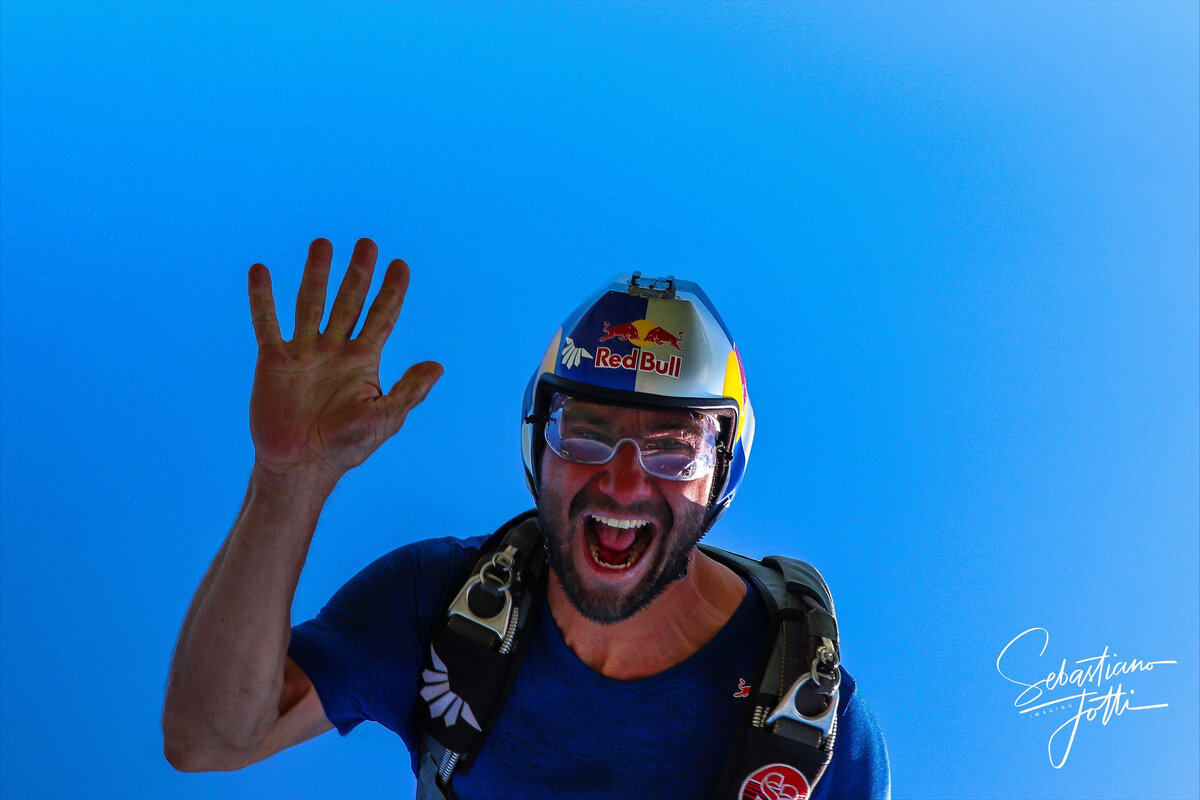

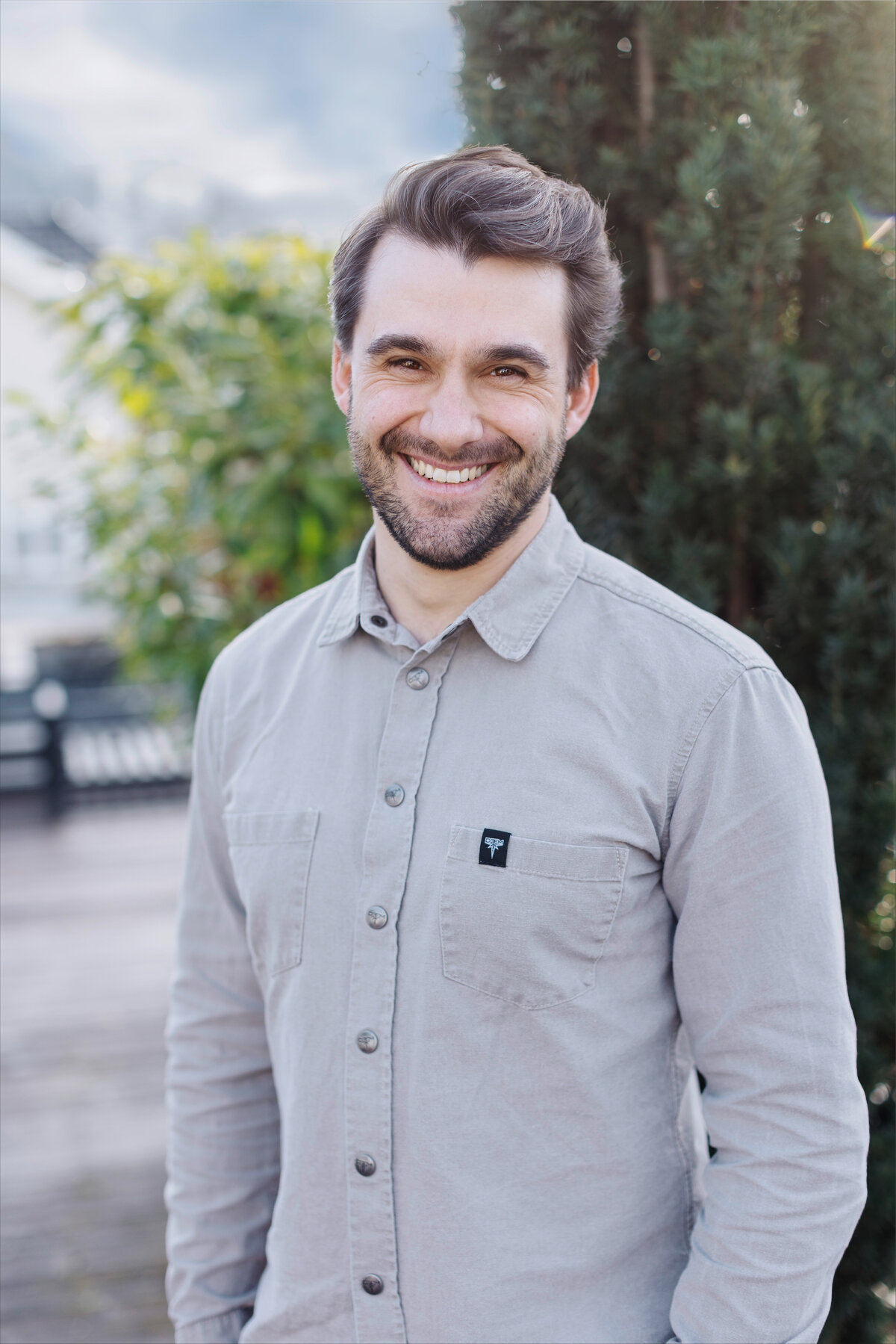
You were an extreme athlete in Red Bull's Sky Dive Team. What does studying at the FHV have in common with your sports career?
Felix Seifert: More than you might think at first glance. Both were a long-term project, where it was less about the individual big moment and more about sticking with it when things got uncomfortable. And both made me realize that judgment is more important than courage. There's a saying about skydiving that has stayed with me for a long time: The best skydivers are not the bravest, but the ones who say no most often. It's similar when you're studying alongside your job. You have to know when to step on the gas and when to take a break, otherwise you'll break somewhere along the line. Stay structured, sort out your priorities, have a plan B in the drawer. The basic principle is the same.
How did you come to choose the Bachelor's degree in International Business Administration at the FHV?
Felix Seifert: After seven years of professional sport and the end of my career in 2022, it was clear that I wanted to have a professional foundation on which I could build the next stage. Not just a retraining program, but something with substance and an international focus. The FHV had the format that suited my situation - part-time, broad in terms of content, close to the region where I work and live. I didn't want to have to commute, nor did I want a purely distance learning program where you don't know names and faces at the end.
What is your personal review of the part-time Bachelor's degree in International Business Administration?
Felix Seifert: Exhausting and rewarding, in that order. Exhausting, because part-time means that you have to work, study and have a private life in three areas at the same time and one of them always falls short somewhere. Rewarding, because I have learned more about companies, markets and myself in recent years than ever before. I go into meetings and projects with a different perspective than I did three years ago. Not because I know everything now, but because I know better what to ask when something is not clear to me. How easy was it to combine your job and studies? Felix Seifert: Feasible, but nothing for free. At the advertising agency BAP and now at FHE Gastro, I had employers who went along with me. Without that, it would have been much harder. The FHV format is tailored to working people, you can tell. Nevertheless, there were phases in which examinations, projects and day-to-day business came together at the same time, and then the weekly schedule was packed into the evenings. What helped: planning carefully, realistically assessing what you can fit into a week and accepting that not everything will get top marks at the same time.
Was there a highlight of your studies?
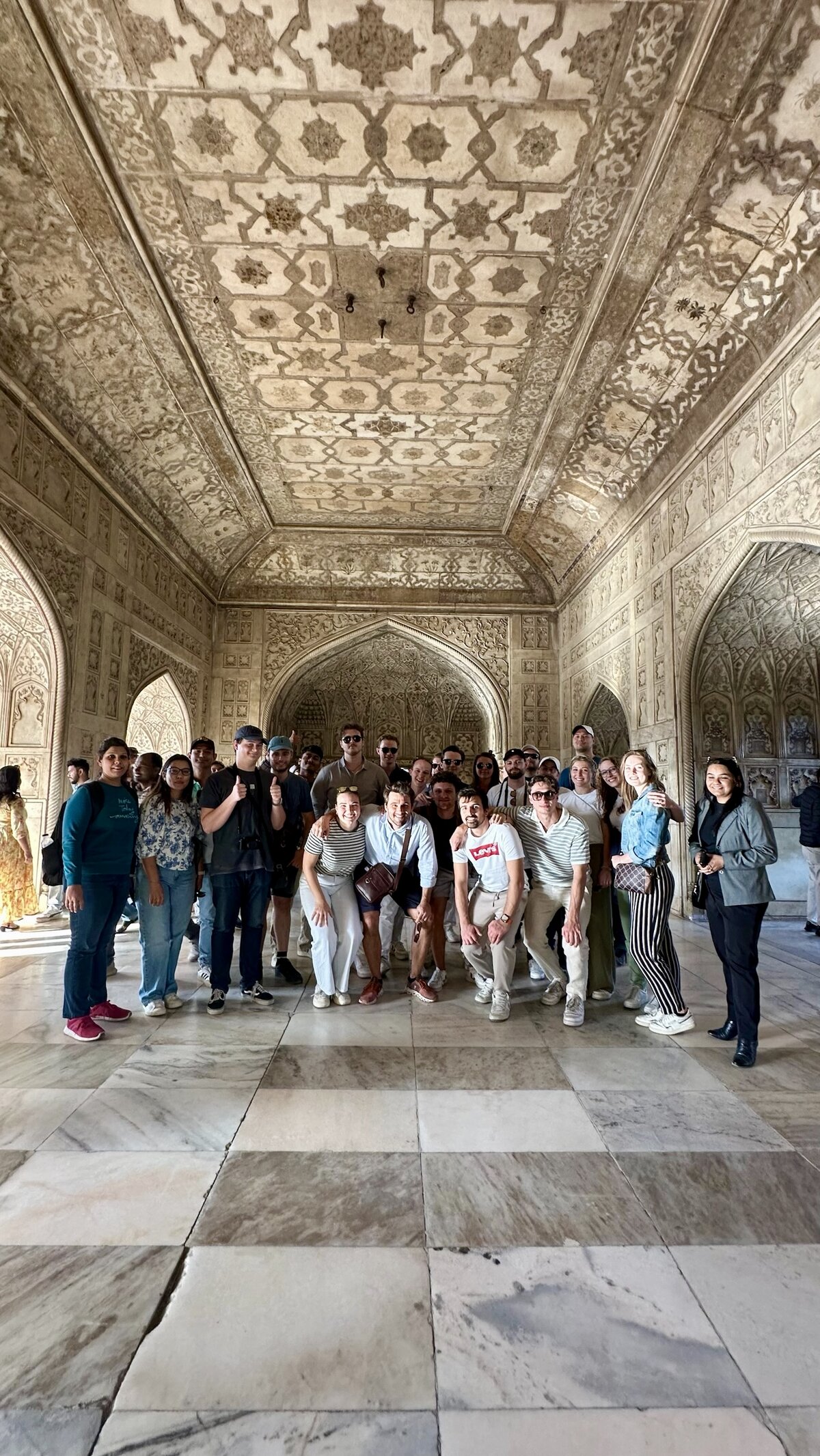
Felix Seifert: Yes, the stay abroad in India, together with the subsequent vacation in Sri Lanka. We had a really good group of students in our year. People you can put up with for two weeks in a small space and who work purposefully and consistently (and still have a sense of humor). The main topic was intercultural competence - in other words, how mentality, communication style and working methods differ as soon as you leave the European comfort zone. What is written in the textbook under "cultural dimensions" takes on a different sharpness when you are in the thick of it for two weeks, in conversations that are timed differently, in decision-making processes that run differently, in a form of politeness that you first have to learn to read.
What were the particular challenges during your studies?
Felix Seifert: Two. The first was the transition from professional sport to studying. I was used to training and competitions having a clear rhythm. You know when you have to be ready. During my studies, I had to learn to set my own pace because no one else was setting it for me. The second: the bachelor's thesis alongside a full-time job and family life. It's not a sprint, it's a marathon with changes of pace, and you quickly realize which routines work and which only last as long as nothing gets in the way.
What topic are you dealing with in your bachelor's thesis?
Felix Seifert: With the Corporate Sustainability Reporting Directive (CSRD) reporting and sustainability communication in Vorarlberg companies. The CSRD (the European Sustainability Reporting Directive) forces companies to make their non-financial performance transparent. I was interested in the question of how companies in Vorarlberg are dealing with this pressure: Who takes this as a real opportunity for transformation, who tries to get through as elegantly as possible, and where in between does what is called in the literature "Aspirational Talk" emerge. In other words, communication that promises more than the company actually delivers. I conducted interviews with sustainability managers from the region and analyzed them qualitatively.
How do you see your personal "transformation" from former extreme athlete to project manager for digitalization and organizational development at FHE Gastro?
Felix Seifert: To be honest, it feels less like transformation and more like extension by other means. In sport, I learned to keep a cool head in complex situations, to understand systems and to work with people who need to be in tune. That's exactly what I do today, only in a "safe office". The stage is different, the basic craft is more similar than you would think from the outside. What has changed: I now work in time horizons that are no longer measured in seconds. That's a change of its own, which sometimes took me longer than it should have.
What are your plans after graduation?
Felix Seifert: First to take a deep breath and go on my honeymoon in August 2026, which is firmly booked and comes before everything else. In September, I'll be starting a Master's in International Business Administration - Sustainable Management with a specialization in People, Organization & Transformation at the FHV. The subject fits in perfectly with what I'm doing at FHE and I want to get a better grounding in the subject before I'm completely absorbed by the practical side of things. What would you like to say in conclusion? Felix Seifert: Anyone who considers a second educational path and hesitates because they think they are too old, too busy or too far removed from the school curriculum ... in most cases, that's an excuse. My studies have shown me that it sounds harder than it is once you're in. And the FHV makes it more pleasant in that respect than most other universities.
Thank you very much for the interview.
Are you interested in studying International Business Administration at FHV? Then find out more about the course content, career opportunities and study options – and take the next step in your career.
Find out more here!


